
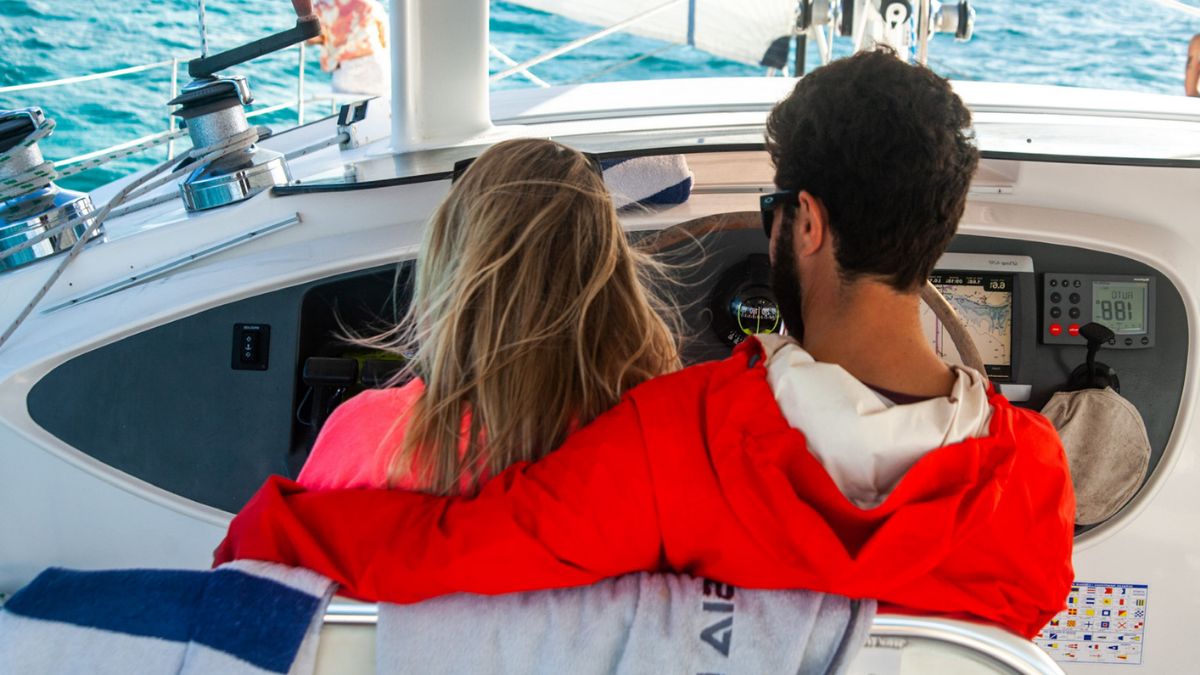
When you have a partner who isn't sure.
It usually starts with a good evening.
One of you has been reading about it for months. You bring it up over dinner. You describe the anchorages, the unhurried mornings, the life you can see so clearly.
Your partner nods, says "maybe," and changes the subject.
So you try again next week, with more detail. Then you send a video. Then you notice the quiet. The more you explain, the less they say.
If that sounds like your house, nothing is wrong with you or with them. At Bluewater Cruising we coach people who are preparing to cruise, and one keen partner and one hesitant partner is a pattern our coaches see all the time. One of you is a 10. The other is a 5. And a 5 is rarely a no.

What's going on in their head
The hesitant partner is usually carrying a worry they don't say out loud.
"I'll be the one who ends the dream." They don't want to be the villain. So they stay vague, and vague sounds like a no.
"I can't picture it." They imagine the hard parts with nobody to show them what a normal day looks like. Seasickness. A small space. Being left to run the boat if something happens to you.
"It's all or nothing." Sell the house, leave everyone, go forever. Nobody says yes to that on a Tuesday night.
Chris Biasutti, our founder, puts it plainly: you can't pull your partner up the mountain. They have to climb it for their own reasons, with their own picture of the summit. Alie, our cruising coach, says the same thing another way: you can't drag your partner through this lifestyle. So stop selling and ask a different question: what do you need for this to work?
What do you need for this to work?
Alie calls the answers your lifestyle demands. They are not the dream itself. They are the conditions that keep the dream sustainable for each of you. She was the less keen partner herself when she started.
Here is how to do it. Set aside an evening and give each of you a sheet of paper. You are each going to write down your lifestyle demands: what you need for this to work.
- Write your own list of demands, separately. Start each line with "For this to work, I need…" Don't compare yet. The keen partner writes one too, because dreamers have demands as well.
- Make each item concrete. "I want to feel safe" is a wish. "No ocean crossings in the first year" is something you can plan around.
- Put the lists side by side. Look for the overlap first. Then talk about the ones that clash.
- Build the plan around the less keen partner. Their list decides whether the plan lasts.
Not sure what belongs on yours? Here are demands our coaches have heard:
- Time off the boat. A month off every six months, or a month or more away every year.
- A gentler start. No ocean crossings until confidence builds.
- An honest check-in. Every few months, either of you can say "I'm done," and the plan gets rethought without blame.
- A real bed now and then. A night in a hotel or an Airbnb once a month.
- Family close by. Seeing the kids or grandkids at least once a year.
None of these ends the dream. They make it possible. Alie's own list started with a month on land every six months. As her confidence grew, the list shrank, and she ended up crossing an ocean.
Try it small first
You don't have to decide "forever" on day one. Chris was in this spot with his own wife, Sayo. She was six months pregnant when he first raised buying a boat. She said no to a long plan and yes to three months. Three months turned into seven years, one year at a time. His advice to the keen partner: lead with comfort, not the dream. Agree what the end of the first year looks like for both of you, and say it out loud.
Three things to settle before you go
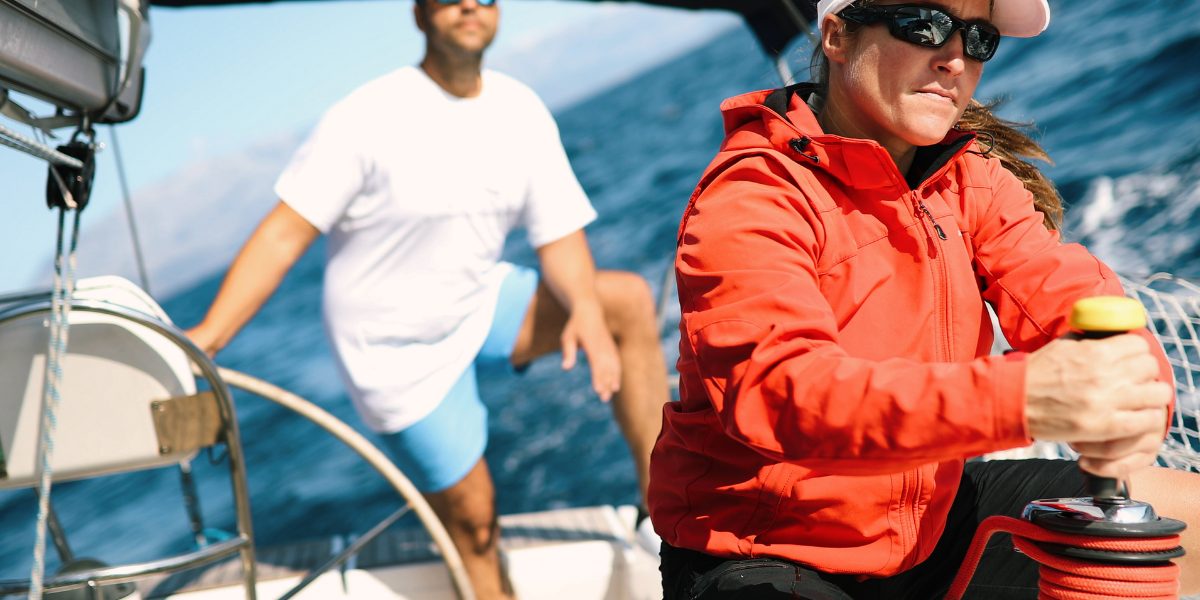
You don't both need to drive it every day. But if one of you is hurt or seasick, the other needs to be able to get it to a dock, get the anchor up and get help. Our coaches on the water teach it this way: trade places at the helm and the bow so each of you sees the other's job. It also takes away the fear of being left alone with it.
Our team says a boat is a pressure cooker: whatever you bring aboard gets multiplied. That is why the early training leans heavily on conversation and communication. Some members have told our coaches it feels more like couples therapy than they expected. Have those talks before you buy anything, because the boat will force them later.
Chris says one of the things that sets people up to cruise longer is time off the boat, at least a month a year, and ideally two. Put it in the plan from the start.
What changes
When both of you have written your lists, the conversation shifts. You are no longer a salesperson and a skeptic. You are two people designing something together, and either of you can say what you need without being the one who kills the dream.
You don't need a boat, a budget or a date to start. You need an evening and two sheets of paper.
Read next
Get clear guidance and your questions answered
You're invited to a free 15-minute call with one of our experienced cruisers to talk through your plans, what's holding you back, and what to do next. No pressure, no pitch.
Bring your partner.
Book Your Compass Call